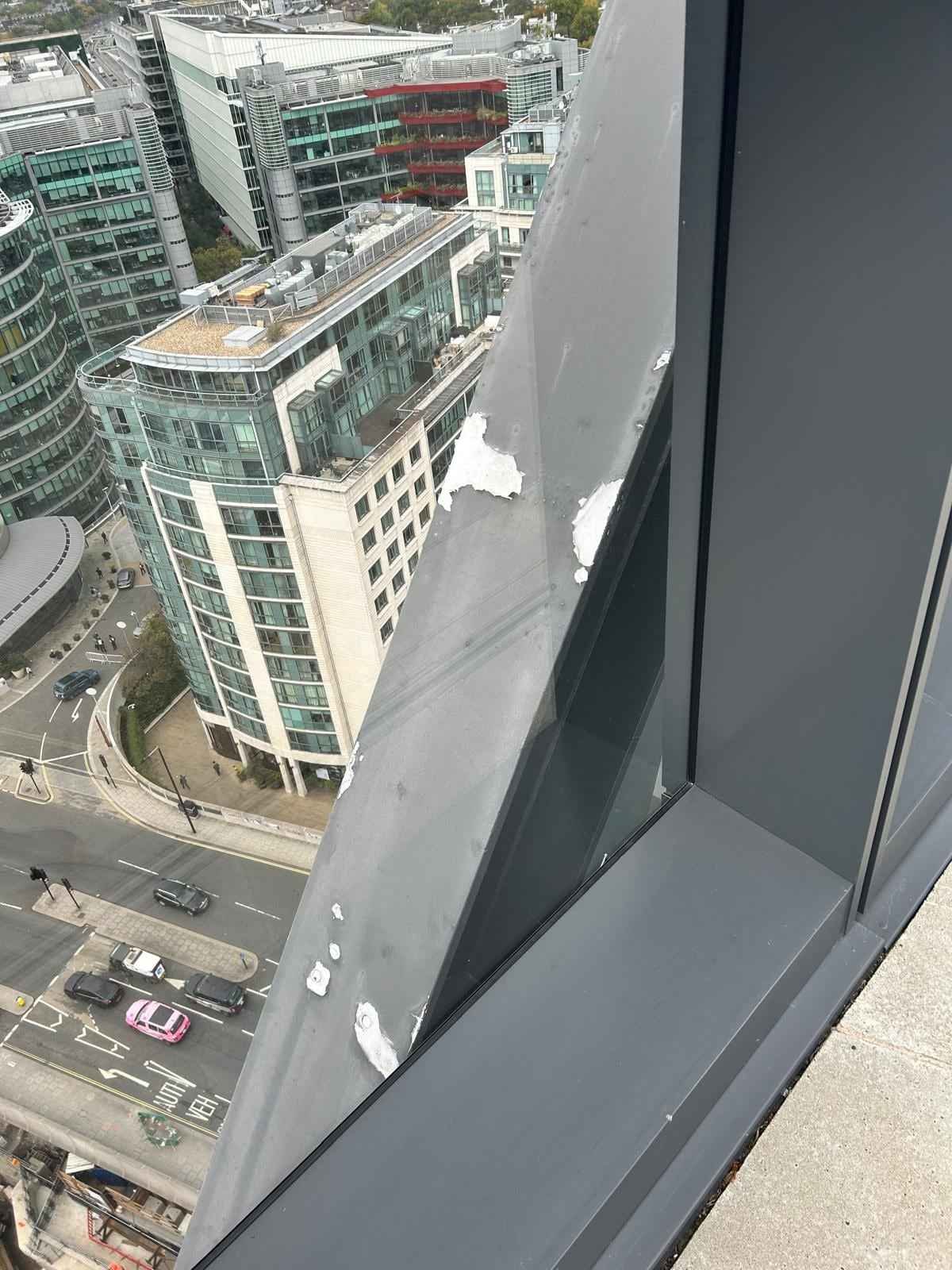
Also known as: Crazing, Checking.
What it looks like
A network of irregular cracks resembling dried mud, sometimes deep enough to reach the substrate. It is most common in zinc-rich primers, especially inorganic zinc silicates, and in water-borne coatings. Cracking is rated using ISO 4628-4.
Common causes
- Excessive film thickness, often on edges, corners and overlaps
- Fast drying in high temperatures or strong air movement
- Applying in conditions outside the data sheet limits, such as the wrong humidity for zinc silicates
- Coatings that are too rigid for the film build applied
Prevention
- Measure wet film thickness during application and avoid overbuilding in corners
- Keep to the data sheet’s maximum film thickness
- Control temperature, humidity and airflow during application and cure
- Train applicators on the particular behaviour of zinc-rich primers
Repair
Mud-cracked coating cannot be sealed over reliably. The affected coating should be removed, usually by blast cleaning, and reapplied at the correct thickness.
Inspector’s note
Mud cracking in a primer often shows up only after the next coat is applied. Inspecting and measuring the primer at its own hold point prevents an expensive surprise.