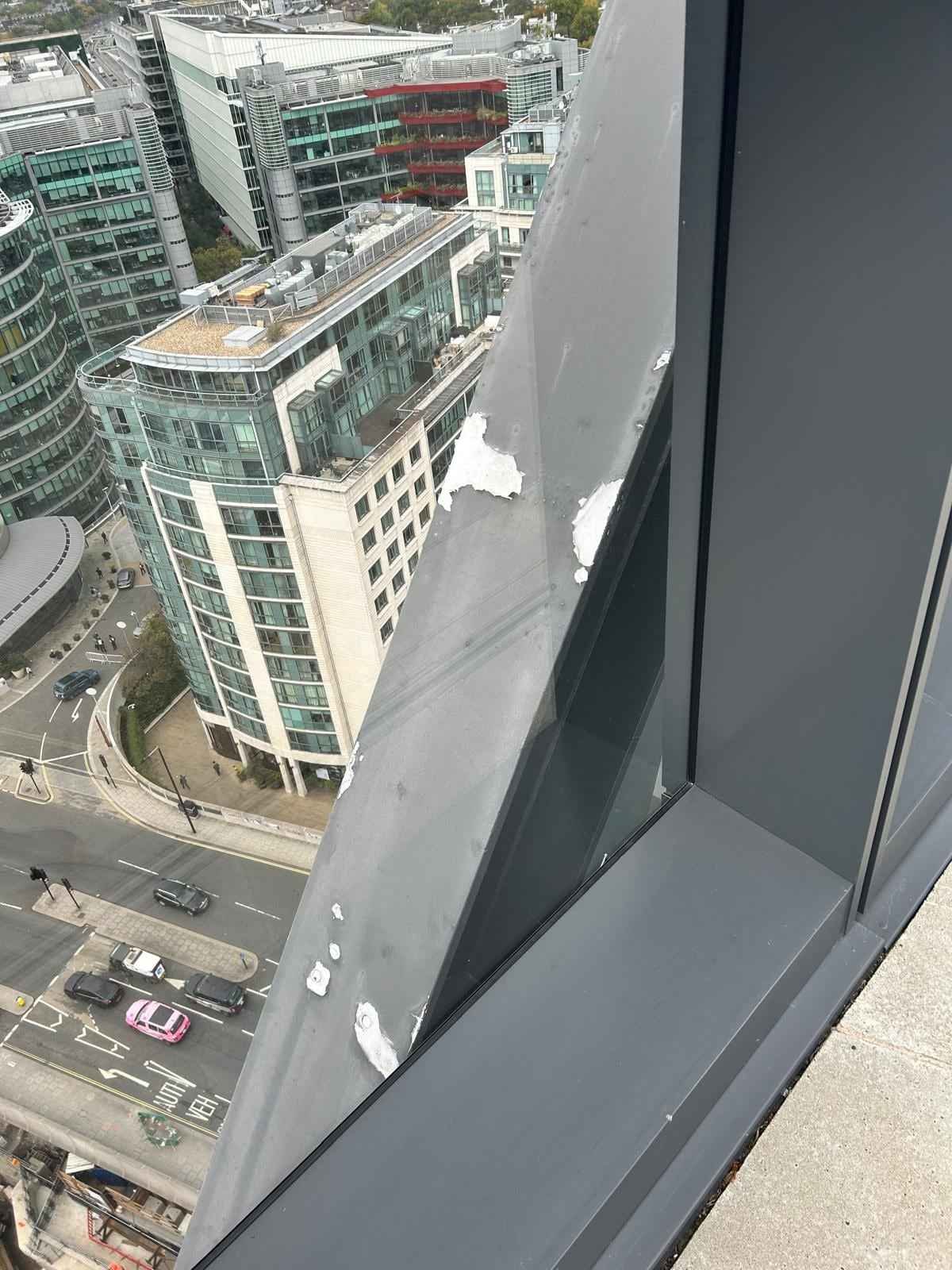
Also known as: Osmotic blistering, Bubbling.
What it looks like
Raised, dome-shaped bubbles in the coating, from pinhead size to several centimetres. They may contain liquid, gas or corrosion products. Blistering is rated for size and density using ISO 4628-2.
Common causes
- Soluble salts left on the steel before painting. Water is drawn through the film by osmosis to dilute them, lifting the coating.
- Solvent entrapment from overly thick films or overcoating too soon
- Moisture or condensation on the surface during application
- Cathodic disbondment on structures with cathodic protection
- Coatings exposed to conditions they were not designed for, such as immersion or high temperature
Prevention
- Test for soluble salts after blast cleaning and wash the steel where levels are too high
- Keep the steel at least 3 °C above the dew point
- Control film thickness and respect overcoating times
- Select a system suited to the real exposure
Repair
Blisters are a symptom. Before repairing, find out what is inside and what caused them, or the repair will blister too. Typically, affected areas are removed, the steel re-prepared and tested, and the system reapplied.
Inspector’s note
Opening a blister and testing the contents and the steel beneath it is often the fastest way to the root cause.